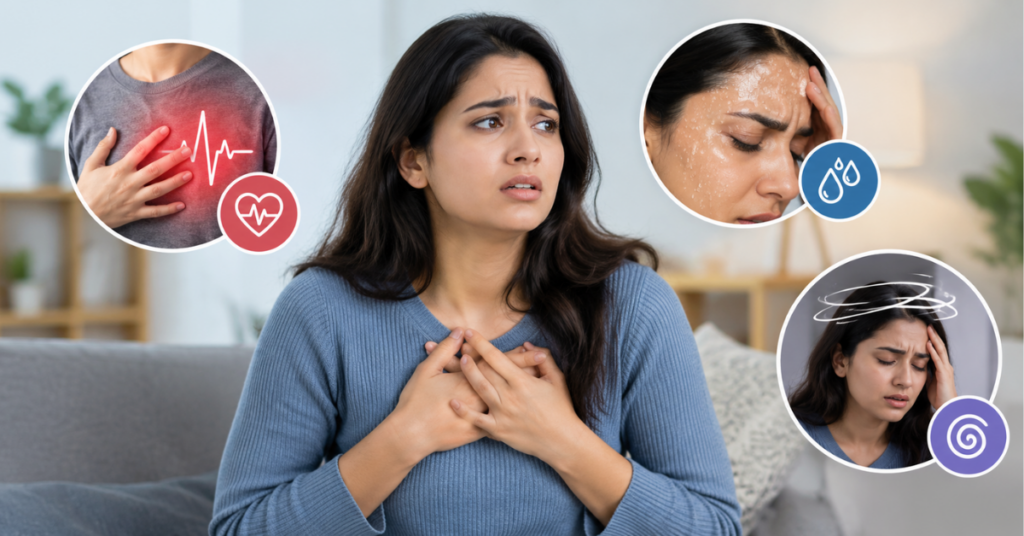
Anxiety can cause physical symptoms such as a racing heart, sweating, and dizziness, even when there is no immediate danger. These sensations can feel uncomfortable or frightening, especially when they occur unexpectedly. Understanding why the body reacts this way can help you manage anxiety and recognize when medical attention is necessary.
How Does Anxiety Affect The Body?
When you feel anxious or threatened, your body activates its natural fight-or-flight response. The brain signals the release of stress hormones, including adrenaline, which prepare you to respond to a perceived threat.
Your heart may beat faster, breathing may change, and muscles may become tense. Sweating can increase as your body prepares for action. Although this response is helpful in genuinely dangerous situations, it can also occur because of everyday worries, stress, or anxiety.
Why Does Anxiety Cause A Racing Heart, Sweating, Or Dizziness?
1. Racing Heart
Adrenaline makes your heart beat faster to deliver blood to your muscles. You may notice pounding, fluttering, or skipped beats, commonly described as heart palpitations. These sensations can occur during stressful situations or even while resting.
2. Sweating
Sweating is another natural response to stress. Anxiety activates the body’s nervous system, increasing sweat production, particularly on the palms, face, and underarms. Some people experience sudden sweating during anxious moments.
3. Dizziness
Anxiety can change your breathing pattern. Rapid or shallow breathing may affect carbon dioxide levels in your blood, contributing to lightheadedness, tingling, or dizziness. Muscle tension and heightened awareness of bodily sensations may also make these feelings more noticeable.
However, heart problems, dehydration, low blood sugar, medication effects, and other medical conditions can cause similar symptoms.
How Can You Manage Anxiety-Related Physical Symptoms?
A few practical habits may help reduce anxiety and its physical effects:
- Practice slow breathing: Breathe gently and comfortably without forcing deep breaths.
- Use grounding techniques: Notice five things you can see, four you can feel, and other details in your surroundings to bring your attention to the present.
- Maintain healthy routines: Aim for adequate sleep and regular physical activity suited to your abilities.
- Limit excessive caffeine: Coffee, energy drinks, and other caffeinated products may worsen palpitations or anxiety in some people.
If symptoms keep returning, a mental health professional can help identify triggers and discuss appropriate treatment options.
When Should You Seek Medical Help?
Seek medical evaluation if symptoms are new, persistent, severe, unexplained, or repeatedly interfering with daily life. Do not assume that a racing heart or dizziness is caused by anxiety without considering other possible causes. Chest pain, fainting, severe breathing difficulty, or a sudden, severe episode requires urgent medical assessment.
If anxiety is affecting your well-being, Anxiety Disorder Treatment in Indore may help you explore appropriate professional support, understand your symptoms, and develop healthier coping strategies.
FAQs
1. Can anxiety cause a racing heart even when I am resting?
Yes. Anxiety can activate the fight-or-flight response even during rest. However, persistent or unexplained palpitations should be medically evaluated.
2. Why do I feel dizzy during an anxiety episode?
Changes in breathing, particularly rapid breathing, can contribute to lightheadedness. Other medical causes should also be considered.
3. Can anxiety cause excessive sweating?
Yes. Stress hormones activate the body’s sweating response. Persistent or unexplained sweating may require medical evaluation.
4. How long can anxiety-related physical symptoms last?
Symptoms may last minutes or longer, depending on the trigger and individual response. Persistent symptoms deserve professional assessment.
5. When should I see a doctor for a racing heart or dizziness?
Consult a doctor for new, recurring, or unexplained symptoms. Seek urgent care for chest pain, fainting, or severe breathing difficulty.