
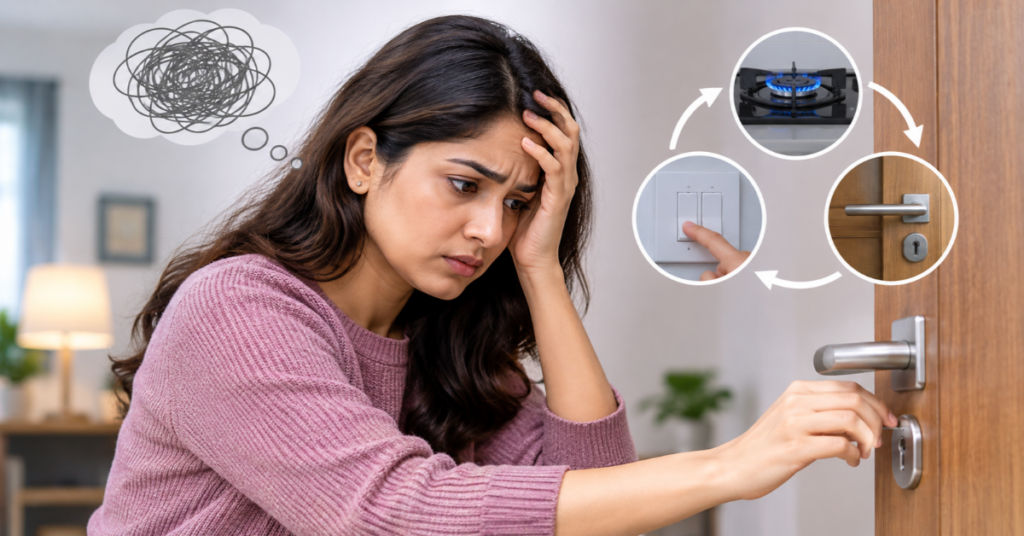
Have you ever checked whether the door is locked, the gas is switched off, or your phone is in your bag, only to check everything again a few minutes later? Do you feel uncomfortable or anxious until you repeat the same action? If this sounds familiar, you may be experiencing repetitive checking behaviour.
Occasionally double-checking things is normal. However, when checking becomes frequent, difficult to control, and starts affecting your daily routine, it may indicate an underlying anxiety-related problem or Obsessive-Compulsive Disorder (OCD).
Why Do People Keep Checking Things Repeatedly?
Repeated checking often happens because of persistent doubt, fear, or anxiety. Even after confirming that something is safe, the mind may create another thought such as, “What if I forgot to lock the door?” or “What if I left the gas on?”
Common reasons include:
- Fear of Making Mistakes: Constantly worrying about forgetting something important or making an error.
- Fear of Danger: Feeling that something bad might happen if an object is not checked repeatedly.
- Anxiety and Stress: Increased stress can make it difficult to feel confident about everyday decisions.
- Obsessive Thoughts: Unwanted recurring thoughts may create an urge to perform checking behaviours.
- Need for Reassurance: Rechecking temporarily reduces anxiety, but the doubt often returns.
Common Signs of Repetitive Checking Behaviour
People experiencing repeated checking may notice several patterns in their daily lives:
- Checking door locks multiple times before leaving home.
- Repeatedly checking gas switches and electrical appliances.
- Reading messages or emails again and again before sending them.
- Frequently checking wallets, documents, or personal belongings.
- Returning home to confirm whether something was switched off.
- Feeling restless or anxious when unable to check something.
These behaviours may consume considerable time and interfere with work, relationships, sleep, and personal responsibilities.
Is Repeated Checking a Sign of OCD?
Repeated checking can be one of the common symptoms of Obsessive-Compulsive Disorder (OCD). OCD involves unwanted, recurring thoughts known as obsessions and repetitive behaviours or mental rituals called compulsions.
A person may understand that checking something repeatedly is unnecessary but still feel unable to stop. The checking behaviour temporarily reduces anxiety, creating a cycle in which the urge returns.
However, not everyone who checks things repeatedly has OCD. A proper psychiatric evaluation is important to understand the underlying reason.
How Can You Manage Repeated Checking Habits?
Some practical steps may help you manage repetitive checking:
- Recognise situations that trigger repeated checking.
- Maintain a regular sleep schedule and healthy daily routine.
- Practise relaxation techniques to manage stress and anxiety.
- Avoid judging yourself for experiencing unwanted thoughts.
- Seek professional guidance if checking behaviours become difficult to control.
Professional treatment may include Cognitive Behavioural Therapy (CBT), Exposure and Response Prevention (ERP), medication when clinically appropriate, or a combination based on individual needs.
When Should You Seek Professional Help?
If repeated checking takes up a significant amount of your time, causes emotional distress, or affects your everyday activities, consider consulting a mental health professional. Early assessment and appropriate treatment can help you understand these patterns and regain control over your routine.
If you are struggling with repetitive checking, anxiety, or unwanted thoughts, consult Dr. Pawan Rathi for professional guidance. Seeking OCD treatment in Indore and appropriate psychiatric care can help you manage compulsive behaviours and work towards better mental well-being.