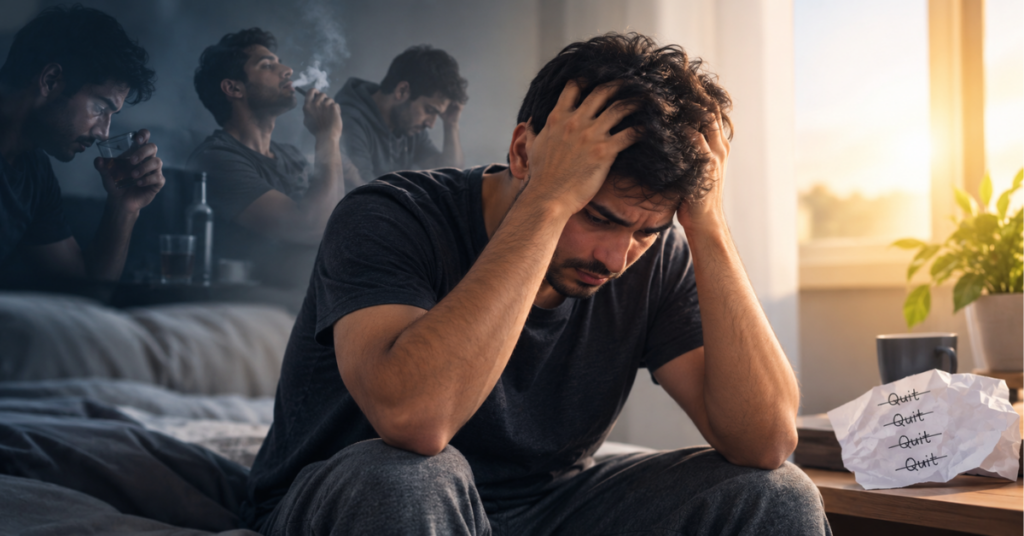
Developing a desire to quit and actually being able to quit are two separate things. People make a new year’s resolution of this sort, only to get caught in the same web days or weeks later. This is precisely the reason why addiction treatment in Indore is much more than just a matter of telling someone to quit.
It’s Not About A Lack Of Discipline
Cravings are not a sign of weak willpower, they are a result of the brain’s adaptation to repeated substance use. Over time, the brain begins to associate certain triggers, people, places, feelings, with the urge to use. A mental health doctor in Indore often explains that these urges operate on a physiological level, not just a psychological one, which is why willpower alone rarely works.
Why Repeated Attempts To Quit Aren’t Failures
Quitting several times unsuccessfully can result in guilt and self-blame. Relapse is a common occurrence in the recovery process, however, and a sign of how much effort someone is putting into recovering, not how little effort they are putting in. Mental health specialist in Indore generally considers every attempt to be useful feedback, aiding in determining what areas of the approach are in need of changes.
Good treatment focuses on the cause of the addiction, rather than the addiction itself. It took more than just determination to deal with the emotional pain of the past, to develop coping mechanisms and to establish a plan. People have a much better chance of long-term success when they access addiction treatment in Indore that addresses the whole person.
FAQs
1. Why does quitting an addiction feel impossible even when you want to?
Cravings and dependence work on both a physical and emotional level, which is why addiction treatment in Indore addresses more than just willpower alone.
2. Are cravings really outside a person’s control?
To a significant extent, yes, since the brain adapts to repeated use, something a mental health doctor in Indore can explain based on individual patterns.
3. Why do people relapse even after quitting successfully for a while?
Triggers and unresolved emotional dependence often play a role, which a mental health specialist in Indore typically addresses during ongoing treatment.
4. Is relapse a sign that treatment isn’t working?
No, relapse is often part of the recovery process, and addiction treatment in Indore usually adjusts the approach rather than treating it as failure.
5. What makes professional addiction treatment different from quitting alone?
It addresses underlying emotional triggers and builds structured coping strategies, something a mental health doctor in Indore is trained to guide effectively.